





Introduction: Strolling Bergamo to meet the master artisans
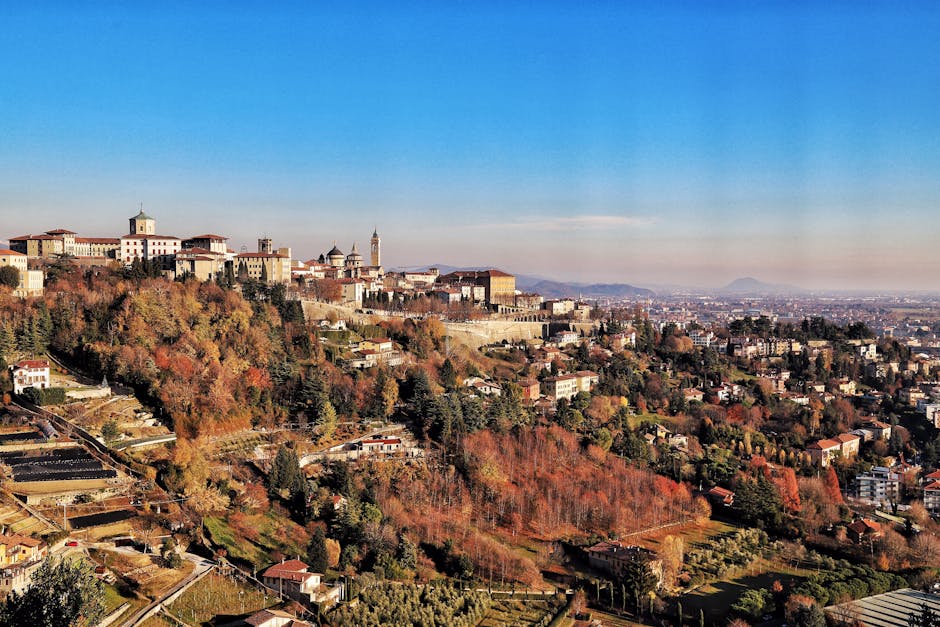
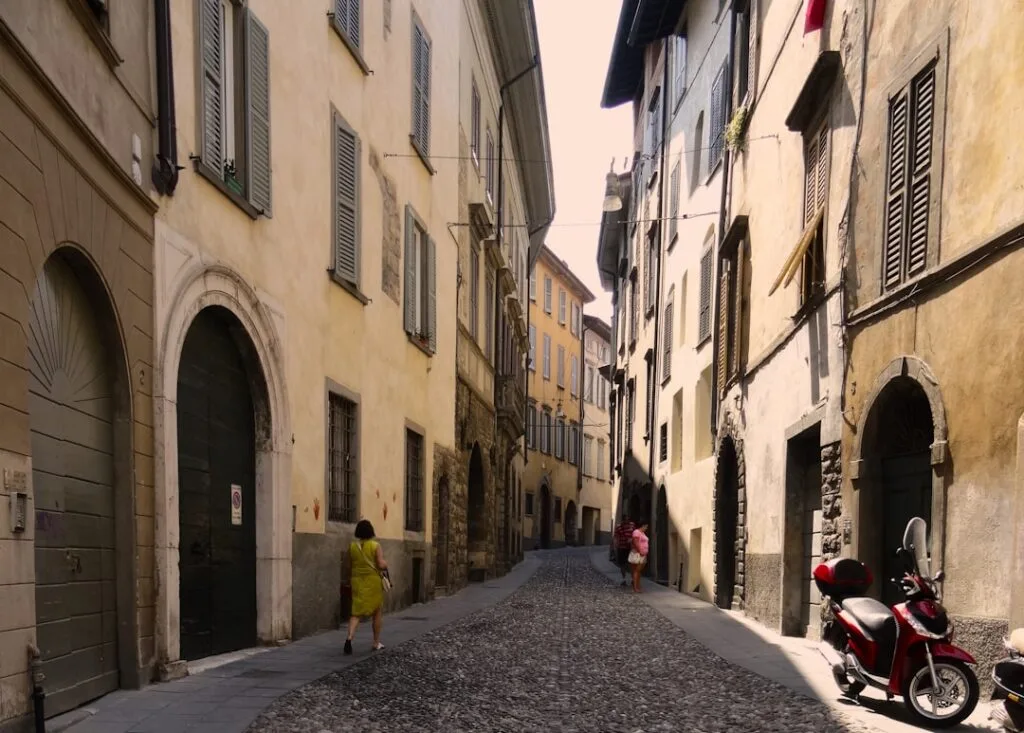
Perched between the Lombard plain and the foothills of the Alps, Bergamo reveals itself as a two-movement score: a modern, lively, industrial bass and an ancient melody, the Città Alta, where every stone seems to tell of a craft. The cobbled lanes, medieval loggias and polychrome façades still house workshops where skills pass down through generations. Here, craftsmanship is not just a tourist product: it’s a living culture, a way of seeing the world and shaping it with patience, finesse and respect for materials.
The walk I suggest takes root in that duality. It leads you through famous squares like the Piazza Vecchia and the Duomo, then plunges you into backcourts where master goldsmiths, cobblers, tailors and glassblowers work in full view. These artisans don’t just fix or sell: they tell stories, teach, show their tool chains and sometimes share a coffee while explaining an age-old technique. In Bergamo, touching a piece is often allowed; you can watch gold leaf drying, patina forming, thread holding or snapping. These gestures are the city’s tactile memory.
This guide is not merely a list of addresses; it’s a sensory itinerary. You’ll find exact locations, opening hours to plan your getaway, indicative prices for guided visits or short intro workshops, and practical tips to get the most from these encounters: how to book, what to wear, when to go to avoid crowds, and how to extend the experience with a regional tasting or nearby heritage visit. We’ll also cover the best angles to photograph workshops, the ideal moments to catch a glassblower at work, or to chat with a master cobbler finishing a hide.
Finally, it should be noted that Bergamo honors its traditions while reworking them. Many artisans today blend old know-how with contemporary design: the tailor who draws on traditional textiles to create a modern jacket, the glassmaker using contemporary colors on antique forms. This stroll is an invitation to see how the past slips into the present, how a small workshop on Via Gombito or Via Bartolomeo Colleoni can reinvent an everyday object and give it a soul. Lace up your shoes — bergamasche, as they say — and bring your curiosity: the Città Alta awaits, with its masters endowed with goldsmith patience and gestures that remain living works.
First landmarks: Città Alta and must-see spots to start your discovery
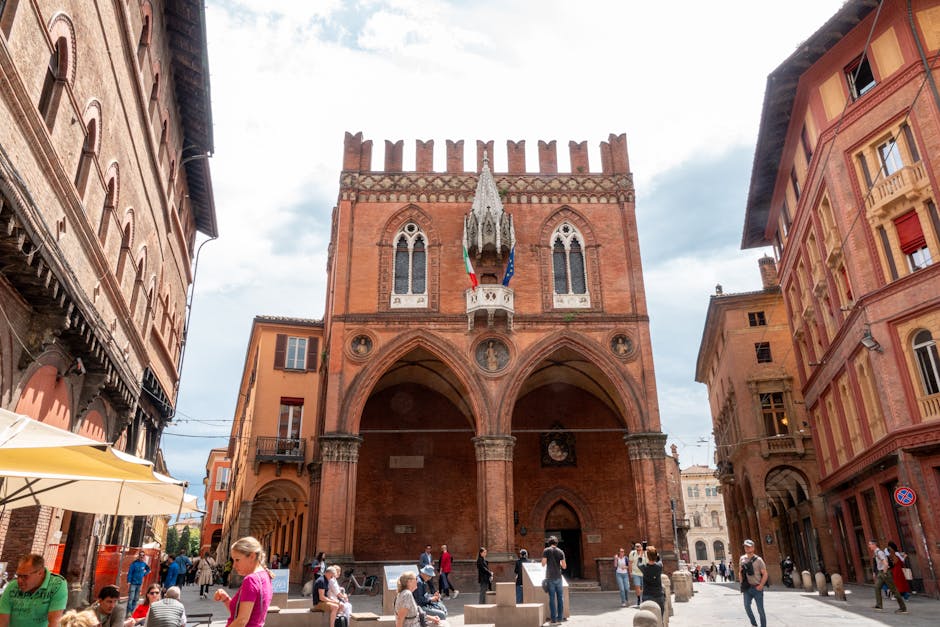
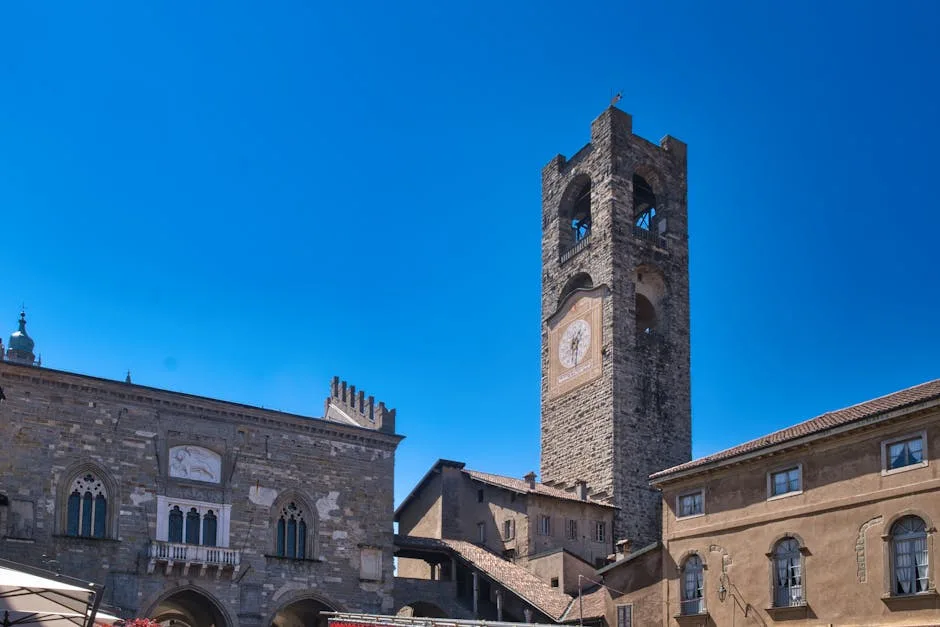
Start your walk in the heart of the Città Alta, the medieval plateau that concentrates Bergamo’s artisan identity. Piazza Vecchia is the best starting point: surrounded by the Palazzo della Ragione and the Biblioteca Civica Angelo Mai, it offers a first immersion into the city’s history. The Palazzo della Ragione, located Piazza Vecchia, 24129 Bergamo BG, sometimes hosts exhibitions dedicated to the crafts and restoration of artworks. Address: Palazzo della Ragione, Piazza Vecchia, 24129 Bergamo BG. Usual hours: 10:00–18:00 (check season and events). Price: around €5 entry for some temporary exhibitions; access to the piazza is free.
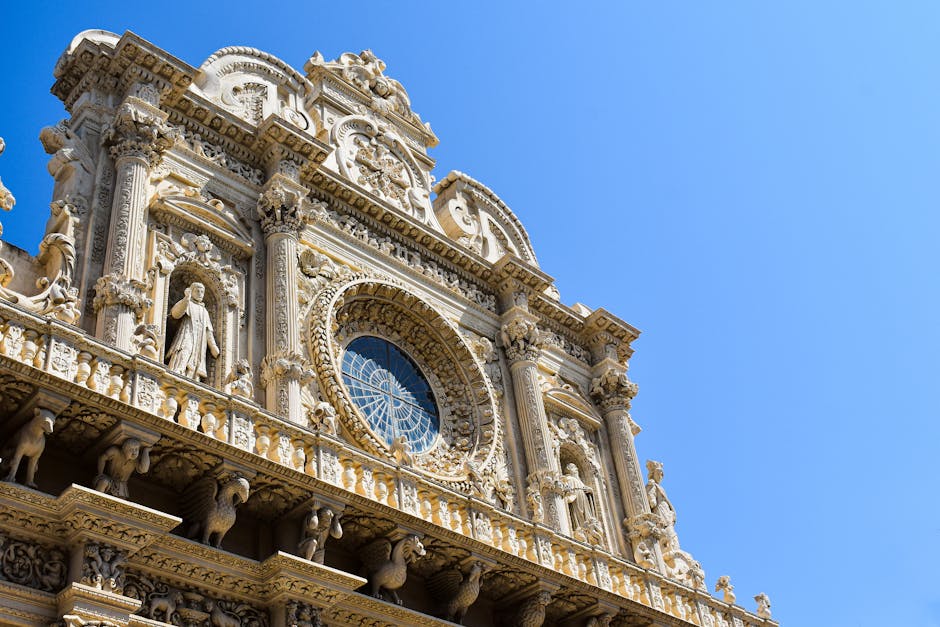
A short walk away, the Basilica di Santa Maria Maggiore and the Cappella Colleoni are must-see stops. Basilica di Santa Maria Maggiore, Piazza del Duomo, 24129 Bergamo BG, is notable for its woodwork and polychrome decoration — a striking example of the long-standing collaboration between artists and artisans. Hours: generally 07:00–19:00; free entry but donations are recommended. Cappella Colleoni, Piazza del Duomo, 24129 Bergamo BG, is a masterpiece of Lombard Renaissance; hours: 09:00–19:00; entrance fee around €4–6.
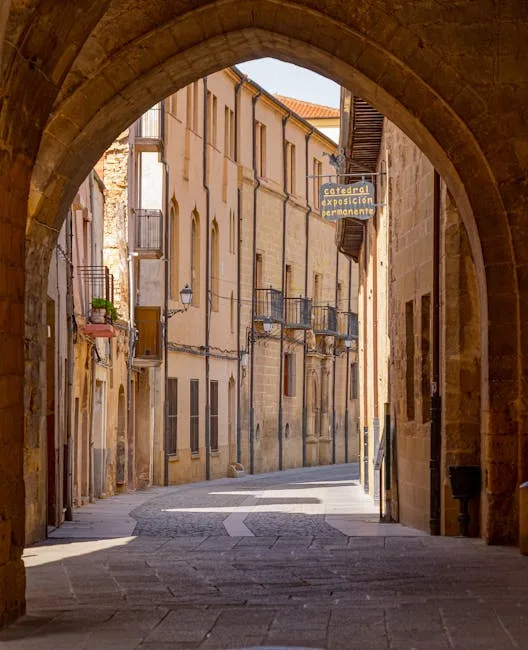
For a glimpse of everyday craft life, then wander along via Gombito and via Bartolomeo Colleoni. These streets still host small shops repairing shoes, carving wood or chasing metal. You’ll also find galleries and designer boutiques collaborating with traditional masters. If you want an organized introduction, the Museo delle Paste (nougat museum and workshop) sometimes runs demonstrations — otherwise, look for signs reading “laboratorio” near side squares: these are often workshops open to the public.
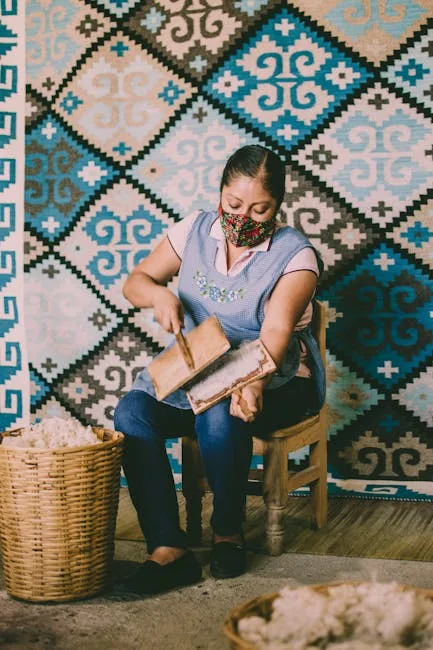
Practical tip: visit the Città Alta early in the morning to catch artisans at work and avoid afternoon crowds. Small Italian shops usually close for lunch between 13:00 and 15:30 — check the hours posted on doors or call ahead to book a demo. Bring cash for small purchases: some micro-shops still prefer it.
 Click here to discover Bergamo’s upper town with a French-speaking guide
Meetings with master goldsmiths and jewelers
Bergamo goldsmithing has long been famed for its finesse and its ability to marry metal and stone in liturgical and civilian objects. In Bergamo, several maintenance workshops keep that heritage alive. Head, for example, to the workshop « Orafi della Città » (Via Colleoni 15, 24129 Bergamo BG) — a name that appears in several local guides — where goldsmiths work on gilding, engraving and restoring old pieces. Hours: Tuesday–Saturday 09:30–12:30 and 15:30–19:00. Guided visit and demonstration: by reservation, indicative price €15–25 per person for a short 30–45 minute demo; introductory workshop possible from €50.
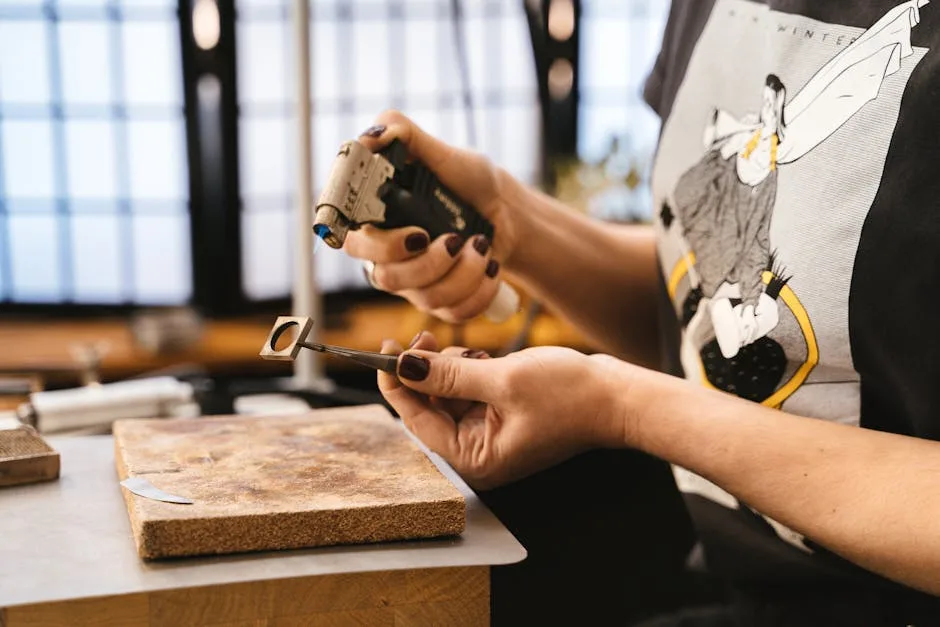
Another worth‑visiting spot is the bottega « Colleoni Gold & Silver » (Via Bartolomeo Colleoni 9, 24129 Bergamo BG), nestled in the medieval streets. Here you can watch torch work, alloy preparation and final polishing. Shop windows display both contemporary jewelry and restored pieces for local churches. Hours: closed Monday, Tue–Sat 10:00–13:00 and 15:00–19:00. Prices: handcrafted jewelry from €80 for simple pendants to several hundred euros for gold and gemstone pieces.
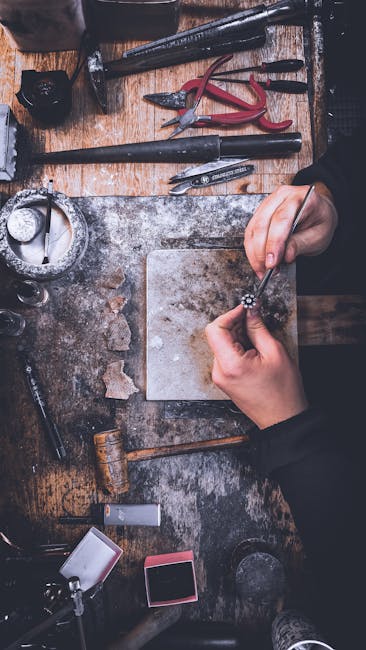
Visiting tips: if you want to observe a specific stage (silver soldering, stone setting, engraving), call or email at least 48 hours ahead. Many workshops host very small groups (2–6 people) for private demos. Respect safety rules: hot work, smoke or chemical areas may be restricted. Finally, if a master agrees to restore a family piece, ask for a written estimate, a timeline and a modest deposit (often 30–50% of the quoted cost).
Click here to take a guided walking tour with a local
Book your route among the artisans
The scent of warm leather drifting from a workshop, the precise clink of a graver on gold or the breath of molten glass: all great openings for your stroll. Choose your pace and angle in advance — technique, history or contemporary creation — so each stop becomes a meaningful encounter. Here are concrete options to arrange meetings with Bergamo’s masters, based on your time and interests.
1. Tailor‑made private tour
A local guide tailors the walk to your interests: goldsmiths, shoemakers or glassblowers. Ideal for requesting private demonstrations, questioning artisans and scheduling visits in advance.
- 🚶 Format: Private, walking tour
- ⏱️ Duration: 2–8 hours
- 🗣️ Languages: Italian, French, English, Spanish
- 💡 Highlight: Personalized itinerary based on your interests
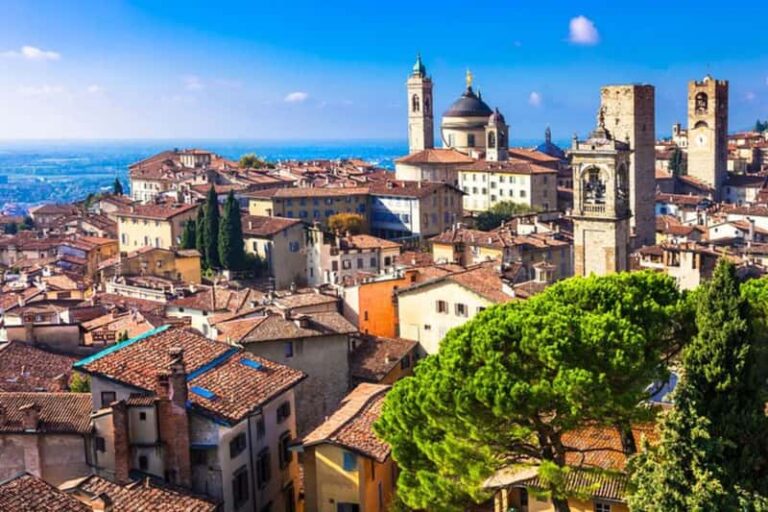
2. French‑language guided tour of Città Alta
A concise route (1h30) in French to grasp the essentials of the upper town and spot workshops to visit later at your own pace. A good compromise if you’re short on time.
- ⏱️ Duration: 1.5 hours
- 🚩 Start: Piazza Mercato delle Scarpe (funicular)
- 🗣️ Languages: French
- 👌 Ideal for: Quick orientation and first contacts
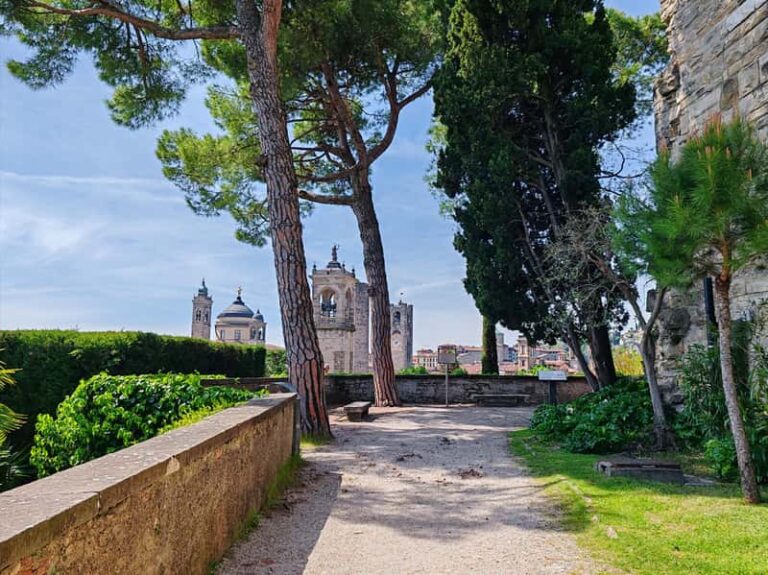
3. Full tour with meal
Private 4‑hour excursion including transfers, a coffee break and panoramic views: a comfortable option to combine heritage and meetings without rushing.
- ⏱️ Duration: 4 hours
- 🚐 Transport: Private transfer included
- 🍽️ Meal: Coffee included, a tasty break
- 💡 Highlight: Comfort and viewpoints for photographing the workshops
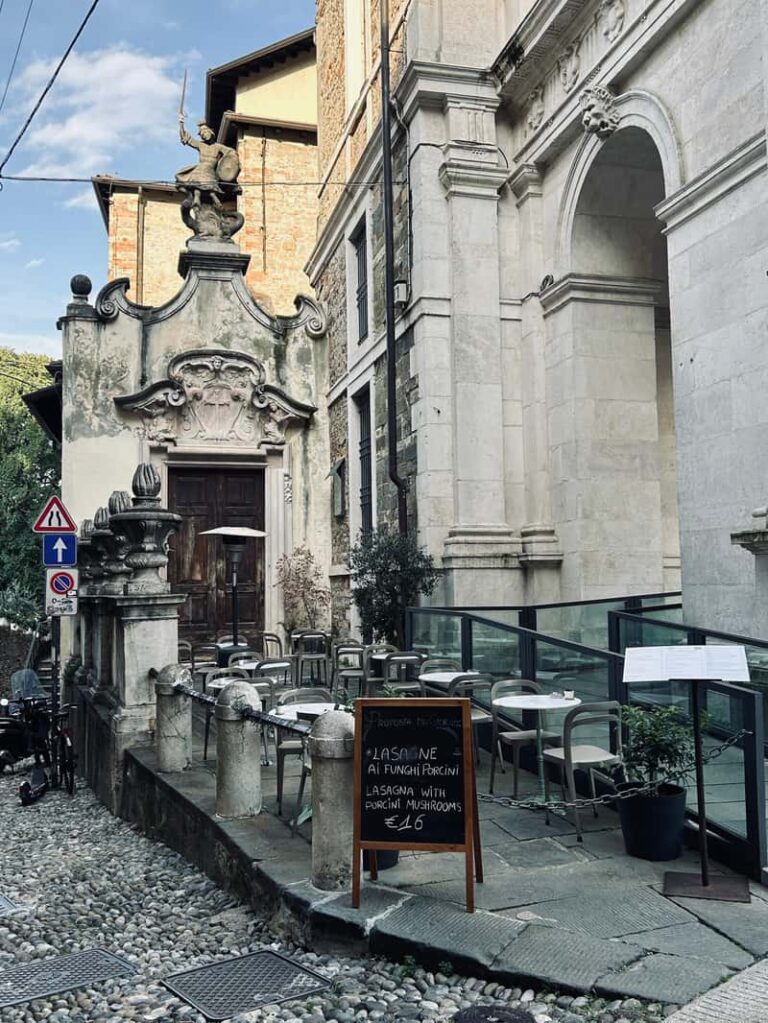
4. Walking tour + sketching session
A guided walk with stops to sketch façades and details: perfect to observe and record artisans’ gestures and motifs, then put them on paper.
- ⏱️ Duration: 2 hours
- 🚶 Format: Creative walking tour
- 🗣️ Languages: English, Italian, Spanish
- 💡 Highlight: Active observation of workshop techniques
Leather workshops, cobblers and tailors: bespoke pieces with a Bergamasque spirit
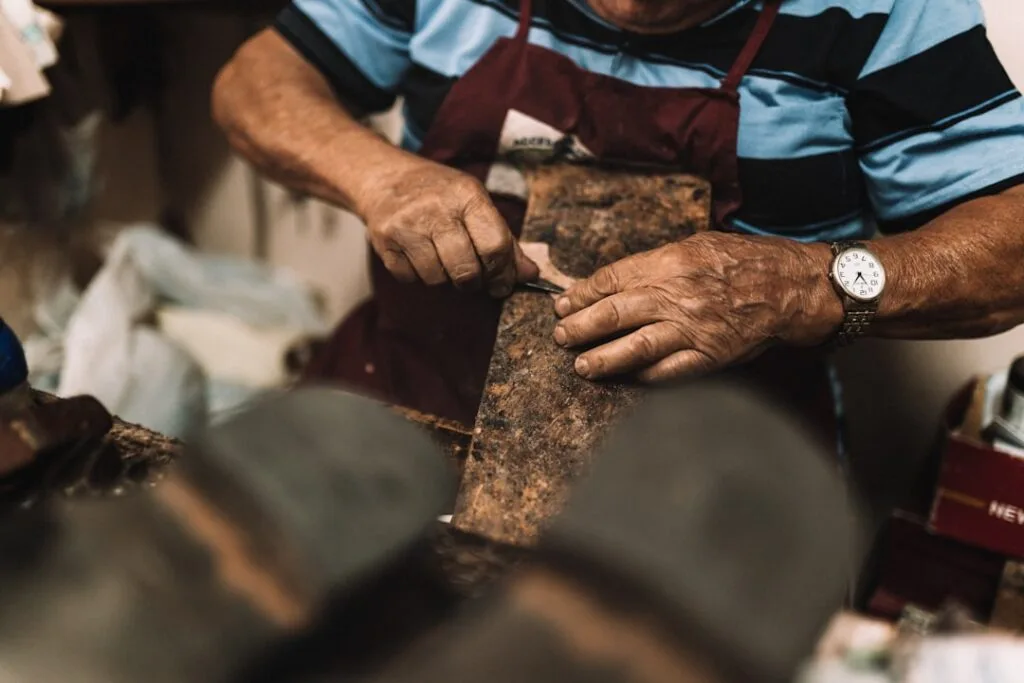
The tradition of shoemaking and clothing in Bergamo is alive and well. Artisan cobblers and tailors still work leather, wool and textiles using inherited techniques adapted to contemporary taste. A landmark leather workshop is « Calzoleria Bergamasca » (Via Gombito 22, 24129 Bergamo BG): a shop-workshop where the master cobbler does repairs, stitches soles and creates made-to-order pieces. Opening hours: Tue–Sat 09:00–13:00 and 15:00–18:30. Simple repairs (heel, partial resoling): from €15–40. Full Goodyear resoling: €80–150 depending on the model.
For bespoke menswear or womenswear, « Sartoria Colleoni » (Via Sant’Alessandro 4, 24121 Bergamo BG) offers personalized cuts, alterations and small runs. Address: Sartoria Colleoni, Via Sant’Alessandro 4, 24121 Bergamo BG. Opening hours: Monday by appointment, Tue–Sat 10:00–13:00 and 15:00–19:00. Rates: simple alteration €10–25, made-to-measure jacket from €350 (depending on fabric and finishes). Here, taking measurements is a ritual: the tailor will have you try several fittings and explain the logic of darts, length and shoulders.

Don’t miss the small belt and leather goods shops, often tucked near the stairways up to the Città Alta. These artisans work local and imported leathers, offer natural dyeing and sometimes run 2–3 hour beginner workshops (cost: €40–70 depending on the item made). Tip: for a lasting souvenir, choose a workshop that lets you take part in the finishing—you’ll leave with an item you helped create.
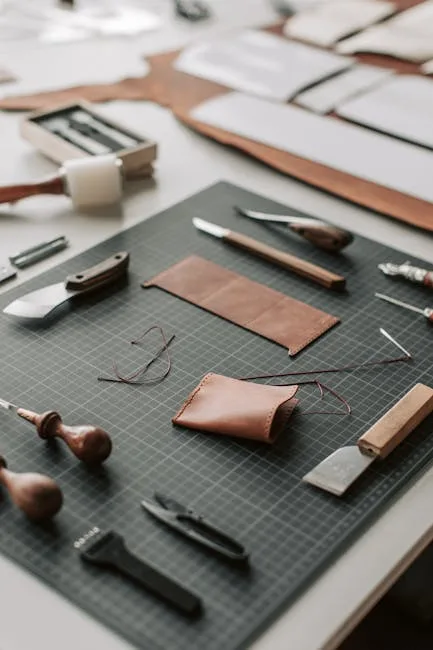
Practical tips: pick a morning slot for workshops that require several drying or resting phases for the leather. If you have an item to repair, bring photos of the intact piece if possible, and specify how you’ll use it (daily, occasional, event) so the artisan can recommend the right treatment. Don’t forget to allow time: a bespoke piece often takes 1 to 3 weeks depending on complexity.
Click here to book a private tailor-made tour with a guide
Ceramics, glass and glassmaking: workshops and demos not to miss
Bergamo and its surroundings have a strong tradition of glass and ceramics, a legacy of Lombardy and exchanges with Veneto. Several studios offer glassblowing demos, clay throwing and short intro courses. A frequently mentioned studio is « Vetreria Artigiana Bergamo » (Via San Tommaso 6, 24129 Bergamo BG) where you can watch blowing and shaping of functional and decorative pieces. Opening hours: Wed–Sun 10:00–13:00 and 15:00–18:00; demonstrations at set times (check the schedule). Demo price: sometimes free, €5–10 when guided; glassblowing intro workshop: from €80–120 depending on duration.
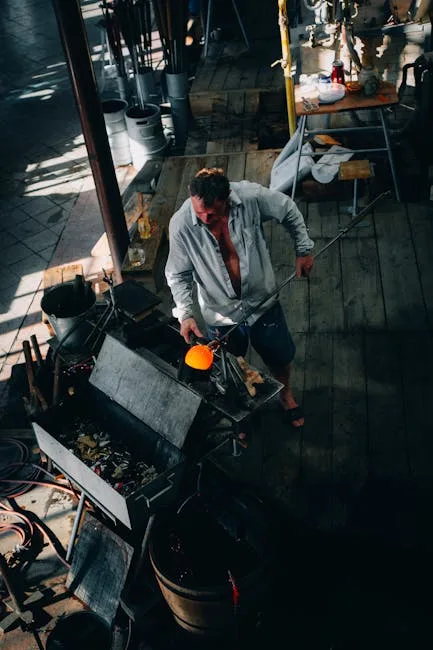
For ceramics, visit « Laboratorio Ceramica Bergamasca » (Via San Lorenzo 14, 24129 Bergamo BG) where they’ll explain the stages of throwing, bisque firing and glazing. Address: Via San Lorenzo 14, 24129 Bergamo BG. Opening hours: Tue–Sat 09:30–12:30 and 14:30–18:30. Intro workshop (2 hours): around €35–60, half-day courses about €80–120. Finished pieces may require 24–72 hours in the kiln; the studio usually offers international shipping (additional cost).
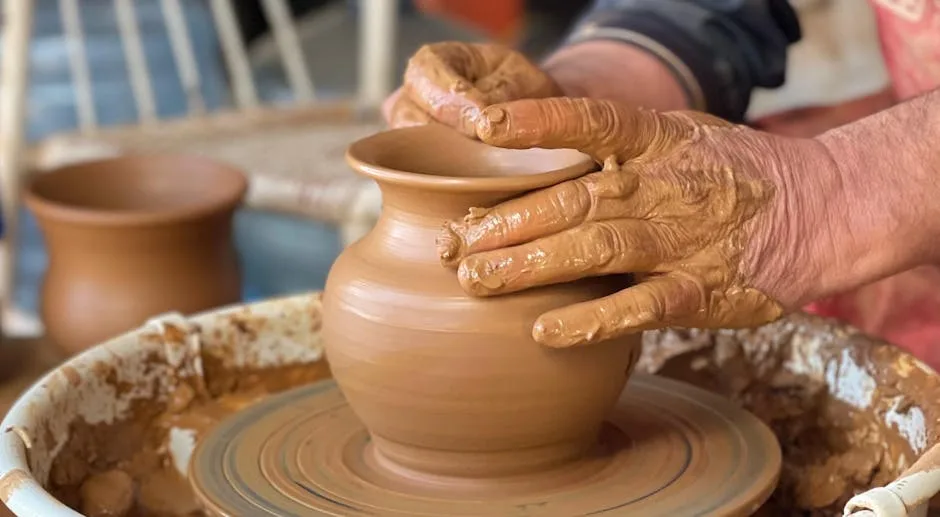
These workshops are educational: expect historical context (traditional uses of the objects), a short demo and the chance to participate under the master’s supervision. If you’re a photographer, ask permission before taking close-up shots: some studios charge a small photo fee if the session is private or disrupts work.
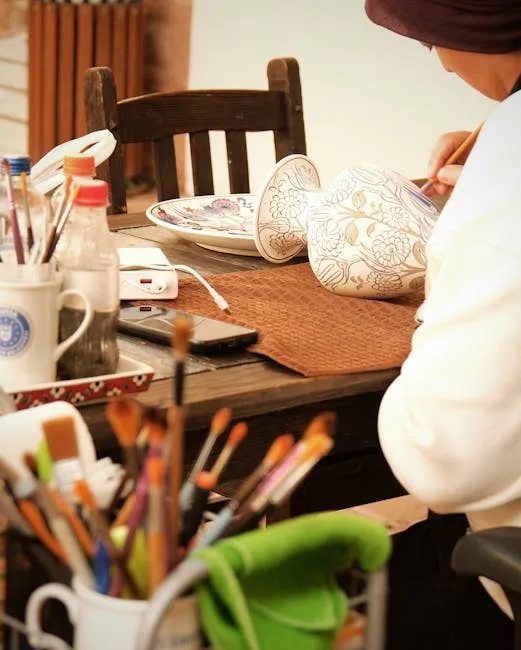
Practical tips: for glass workshops, don’t wear delicate synthetic fabrics and avoid open sandals—safety first. Bring a light jacket even in summer, as some kilns generate heat and visitors may be taken to cooler observation areas. Finally, if you want to buy a fragile piece, ask for professional packaging for travel or choose the studio’s insured shipping option.
Practical tips to plan your artisan route and extend the experience
To get the most out of your artisan walk in Bergamo, a few simple prep and etiquette rules will improve your encounters. First, check opening hours: many workshops close for a siesta between 13:00 and 15:00, and some are closed on Monday. Artisans appreciate visitors who arrive on time and book ahead; call or email 48 hours in advance for demos and 7–10 days for intro workshops in high season (May–September).
Second, set a realistic budget. Demonstrations are often affordable at €0–10, while intro workshops range from €35 to €150 depending on duration and complexity. If you order a made-to-measure piece (shoe, jacket, jewelry), expect a lead time of 1 to 6 weeks and a deposit. Artisans may offer loyalty cards or care tips; always ask for maintenance recommendations (products, frequency, local tricks).

Third, combine workshop visits with nearby heritage sites. After a leather or ceramics workshop, stroll to the Museo Donizettiano (Piazza Cavour) or stop at Caffè del Tasso, Piazza Vecchia 5, 24129 Bergamo BG, to try polenta taragna or a coffee—this helps you feel the cultural context. Caffè del Tasso is a historic spot; usual hours: 08:00–22:00; price of an espresso: about €1.20–1.80.
Click here to taste the vineyards of Franciacorta with lunch
Finally, be curious and respectful: photograph with tact, ask about techniques rather than prices right away, and consider buying a small piece — it’s the best way to support these workshops. If you want to extend the experience, some artisans offer intensive multi-day courses, and the local tourist offices (Ufficio Informazioni e Accoglienza Turistica, Via Gombito 27, 24129 Bergamo BG) can help arrange themed routes and transfers from Orio al Serio airport (Aeroporto di Bergamo Orio al Serio, Via Aeroporto, 24050 Orio al Serio BG).
Conclusion: bring back more than a souvenir — the spirit of the master craftsmen
A walk through Bergamo to meet the master artisans isn’t just a string of purchases or visits; it’s a dive into a craft culture where the gesture is heritage. Every workshop tells a story: of a transformed material, a preserved technique, a modern adaptation. Following the alleys of the Città Alta, you don’t just collect objects — you bring home stories, care tips, sometimes a card written in a rough hand, and the memory of a smile exchanged around a workbench.
The addresses listed in this guide — from public palaces to the small botteghe on Via Gombito, Via Bartolomeo Colleoni and Via San Tommaso — are meeting points where a traveler’s curiosity and a master’s expertise respond to each other. To fully enjoy these moments, take your time: allow half a day for each workshop that intrigues you, book ahead when required, and be willing to return in the afternoon or the next day to see a finished piece. The effort is worth it: the handmade object you bring home will have been crafted with knowledge, often with a traceable process.
Finally, remember that supporting these artisans is preserving a city’s identity. Bergamo is small, but its strength lies in these workshops where rare skills are passed on. Choosing a small bottega over an international chain lets a master teach the next generation and keeps a tradition alive. So set off with comfortable shoes, a notebook for names and addresses, a camera to capture moments (with permission), and a willingness to learn. The Città Alta will open its doors, and the master artisans will give you their time — sometimes that’s the most beautiful souvenir of a trip.